What you need to know
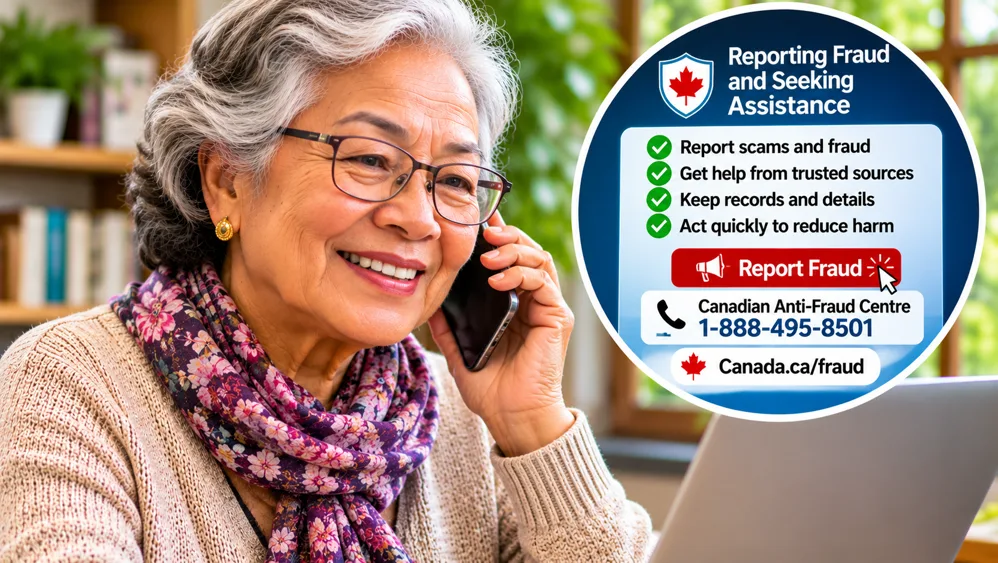
Reporting fraud helps protect your accounts and provides information to investigators. You can report an attempted scam even if no money was lost.
A realistic example
You discover an unauthorized transfer after responding to a fraudulent bank message.
Warning signs
- Unexpected transactions
- changed account recovery details
- unknown logins
- threats demanding more money.
What to do, step by step
- Stop contact with the suspected scammer. Do not pay anyone promising to recover your money for an upfront fee.
- Contact your bank or card issuer immediately using an independently verified number. Ask about securing accounts and disputing transactions.
- Save messages, screenshots, dates, phone numbers, receipts and transaction references. Do not reopen harmful attachments.
- Report to local police when appropriate and to the Canadian Anti-Fraud Centre through its official website. Call 911 if there is immediate danger.
- If identity information was exposed, ask Equifax Canada and TransUnion Canada about fraud alerts and monitor your credit.
If you have already responded
Keep report numbers and follow up with your financial institution. Seek help from a trusted person if needed; do not share passwords or codes.
Trusted resource
https://antifraudcentre-centreantifraude.ca/ (Internet required.)
Remember: take your time, verify independently and never share passwords or verification codes.